
Motorhome Painting Cost in Virginia: 2026 Pricing & Specialist Guide
- Alina Rikli
- 1 day ago
- 12 min read

Most local body shops will claim they can refinish your rig, but very few possess the specialized infrastructure to prevent that paint from peeling after just a few seasons on the road. You've likely encountered the frustration of wide-ranging estimates and the difficulty of finding a facility with a spray booth large enough for a Class A motorhome. It's a high-stakes investment. The anxiety of poor color matching or a failing finish is a valid concern for any owner who values their vehicle's longevity and resale value.
Understanding the actual motorhome painting cost virginia residents should expect in 2026 involves looking beyond the surface. We'll show you the real-world factors driving these prices in the DMV area and how to choose a partner that delivers a factory-quality result. You'll gain a clear understanding of Virginia's latest VOC compliance standards, the necessity of professional fiberglass repair, and why commercial-grade facilities are the only reliable choice for oversized vehicle logistics. This guide provides the clarity you need to move forward with confidence and secure a finish that stands up to the elements.
Table of Contents
Motorhome Painting Cost in Virginia: The 2026 Price Landscape
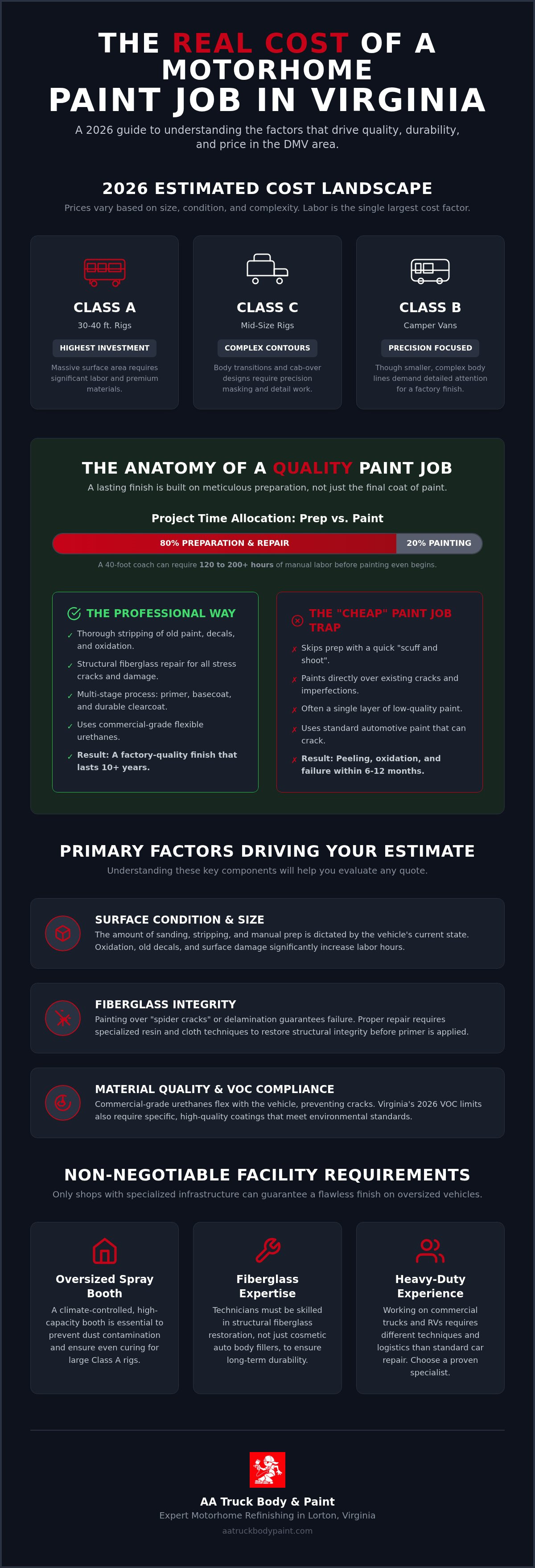
Estimating the motorhome painting cost virginia owners face requires a look at the local economic landscape. In the Northern Virginia and DMV corridor, labor rates typically sit higher than national averages due to the specialized facility requirements and the cost of maintaining high-capacity spray booths. While national benchmarks for a full professional repaint often range from 5,000 to 35,000 dollars, these figures fluctuate based on the complexity of the job and the regional cost of skilled labor. A 40 foot coach can easily demand 120 to 200 hours of manual labor, making the technician's time the most significant variable in your estimate.
The choice between a basic "scuff and shoot" refresh and a true restoration also dictates the final price. A budget focused job might involve a quick sand and a single layer of paint, but it rarely addresses the underlying oxidation or surface imperfections that lead to peeling. Professional Automotive paint applications involve a multi-stage process including primer, basecoat, and clearcoat. This ensures the finish can withstand the UV exposure common during Virginia summers. Additionally, Virginia's 2026 VOC limits for mobile equipment refinishing require specific, high quality coatings that meet strict environmental standards, which can influence the cost of supplies compared to previous years.
Estimated Cost Ranges by Vehicle Class
Class A motorhomes represent the highest investment tier. Their 30 to 40 foot scale requires massive surface area preparation and significant volumes of premium coating materials. For Class B and C rigs, the smaller footprint might suggest a lower price, but these vehicles often feature complex body contours and fiberglass transitions that require precision masking and detail work. Towable RVs and fifth wheels present their own challenges; the exterior material, whether it is smooth gelcoat or corrugated aluminum, determines the amount of mechanical sanding needed before the first drop of primer is applied.
The "Cheap" Paint Job Trap
Low estimates often signal that a shop is skipping critical preparation steps. Without thorough stripping and cleaning, new paint will struggle to bond with the aged substrate, leading to premature oxidation and failure. Choosing a cut-rate service often results in a finish that looks acceptable for six months but begins to degrade shortly after. The prep-to-paint ratio serves as the primary driver of the total project cost. Investing in a shop that prioritizes the labor intensive sanding phase ensures a factory quality result that protects your vehicle for a decade rather than a single season.
Primary Factors Driving Your Virginia Motorhome Painting Estimate
Calculating the total motorhome painting cost virginia residents see on a final invoice involves more than just selecting a color. While the physical dimensions of the vehicle set the baseline, the condition of the substrate dictates the actual labor hours. Most professional estimates are heavily weighted toward surface preparation. This includes mechanical sanding, chemical stripping of old decals, and the removal of oxidation that has built up over years of travel. Without this intensive manual labor, even the most expensive coatings will fail to bond correctly to the vehicle body.
Material selection also plays a pivotal role in long term durability. Commercial grade urethanes are engineered to flex with the movement of a large vehicle, whereas standard automotive paints may crack under the stress of a chassis twisting on uneven roads. Specialized equipment is equally vital for a professional result. A facility must utilize a high capacity, climate controlled spray booth to prevent dust contamination and ensure even drying. Before committing to a shop, reviewing the FTC's auto repair guide can help you understand your rights regarding written estimates and repair authorizations.
The Importance of Fiberglass Restoration
Most motorhomes utilize fiberglass side panels and caps that require specific handling. Painting over "spider cracks" or stress fractures is a recipe for immediate failure; the underlying movement will simply split the new finish within months. Structural integrity must be restored using specialized resin and cloth techniques before any primer is applied. If you've noticed signs of delamination or impact damage, securing a professional fiberglass repair assessment ensures your new paint job has a stable foundation.
Paint Quality and Environmental Protection
The DMV climate presents unique challenges for oversized vehicles often stored outdoors. High humidity levels and intense UV exposure can quickly dull a low quality clear coat, leading to a chalky appearance. A multi stage process involving primer, basecoat, and high solid clear coats provides the necessary barrier against environmental degradation. For those requiring partial repairs after an incident, precision color matching is essential. This ensures the new panels blend seamlessly with the original factory finish, maintaining the aesthetic value of your investment.
Distinguishing between a cosmetic refresh and a collision repair is vital for accurate budgeting. Cosmetic refinishing addresses sun-faded or oxidized exteriors, essentially restoring the original luster of the vehicle's finish. In contrast, collision refinishing involves matching existing panels after structural work or impact repair has been completed. The
motorhome painting cost virginia
owners encounter often depends on which category their project falls into. While cosmetic jobs are elective, collision repairs are usually necessity-driven and require detailed documentation to meet insurance carrier requirements. Painting a motorhome isn't the same as refinishing a passenger car. The logistical challenge of handling oversized panels requires specialized equipment and heavy-duty expertise that standard auto shops lack. Industry standards and best practices from organizations like
highlight the technical complexity involved in maintaining and repairing oversized vehicle bodies. Commercial facilities are specifically designed to manage these massive surface areas, ensuring the finish remains uniform across 40 feet of fiberglass or aluminum without the visible "dry spray" often found in smaller booths.
When to Choose a Full Exterior Restoration
If your clear coat has begun to peel or flake away in large sections, you've reached the point of no return for simple detailing. A fresh professional paint job significantly boosts resale value, often paying for itself when it's time to sell. It transforms a dated, weathered coach into a modern asset. While partial spot repairs save money upfront, a full repaint provides a unified, durable barrier against the elements and prevents future oxidation across the entire body.
Addressing Collision and Panel Damage
Restoring motorhome sides or box truck panels after an accident requires more than just a spray gun. Technicians must ensure seamless transitions between new and old paint to effectively hide the repair site. Specialized commercial shops are the preferred choice for insurance-backed repairs because they understand the structural nuances of oversized vehicles. They provide the precise color matching and structural fiberglass work necessary to return the rig to its pre-accident condition.
Navigating the DMV Market: Choosing a Shop for Oversized Vehicles
Finding a reliable facility in the DMV area requires looking beyond standard automotive repair centers. Most local collision centers are designed for passenger cars and SUVs; their bays and spray booths simply cannot accommodate the physical scale of a Class A motorhome. When you research the motorhome painting cost virginia providers quote, you'll find that specialized commercial facilities are the only ones capable of delivering a factory grade finish. These shops possess the necessary infrastructure to handle oversized vehicle logistics safely without risking damage to the chassis or the finish.
The necessity of an oversized, climate controlled paint booth cannot be overstated. In a standard open air environment, dust and debris can easily settle into the wet coating, ruining a multi thousand dollar project. Commercial grade credentials and heavy truck experience are essential indicators of a shop's ability to manage large scale refinishing. Local expertise in Lorton and Northern Virginia ensures the technicians understand how our regional climate, specifically the high humidity of the Potomac basin, impacts the curing process and material selection. Choosing a shop with a long standing presence in the community provides a layer of accountability that mobile or fly by night services lack.
Facility Requirements for Motorhomes
A shop must meet specific physical criteria to handle a full size rig. Height and length constraints are the first hurdle; if a shop can't comfortably fit a 45 foot coach with its slides retracted, they shouldn't be your first choice. Environmental controls are equally important for managing humidity during the curing phase. Additionally, painting a high roof vehicle requires specialized scaffolding and safety equipment. This ensures technicians can apply even coats across the top caps and rooflines without compromising the spray pattern or their own safety.
Questions to Ask Your Estimator
Before signing a work order, it's vital to vet your provider. Inquire about the specific paint brands they use and the warranties offered on their workmanship. Ask for documented examples of previous fiberglass and oversized vehicle work to verify their technical proficiency. You should also confirm the shop’s experience with commercial and fleet grade refinishing. This professional background ensures they have the discipline and systematic approach required for high stakes, heavy duty aesthetic work. If you are ready to discuss your project with a team that has over 30 years of experience in Lorton, you can request a professional motorhome painting estimate to get started.
AA Truck Body & Paint: Expert Motorhome Refinishing in Lorton
AA Truck Body & Paint has spent over 30 years refining the craft of heavy vehicle restoration. Our facility in Lorton isn't a standard auto body shop. We focus exclusively on the challenges of oversized transport, including RV and motorhome collision repair. This specialized focus ensures that the unique structural needs of your rig are met by technicians who understand commercial grade standards. We've built our reputation on being a straight-shooter in a specialized field, offering the technical mastery required for high-stakes aesthetic and structural work.
Precision is the hallmark of our work. We provide professional fiberglass repair and precision color matching to ensure that every repair blends perfectly with the original body. Managing the motorhome painting cost virginia owners invest requires a shop that gets the job right the first time. Our high-capacity facility is designed specifically for large scale projects, providing the stable environment needed for complex refinishing tasks. We use advanced digital matching systems to replicate factory colors, ensuring that even partial repairs after a collision are indistinguishable from the rest of the coach.
Our Professional Painting Process
Every project begins with meticulous prep work. We don't just spray over existing issues; we address structural fiberglass restoration first to ensure a flat, durable surface. This stage is labor intensive but necessary for preventing the cracks and peeling often seen in budget jobs. Our technicians are trained in the specific resins and bonding agents required for heavy duty vehicle bodies, which differs significantly from the materials used on passenger cars.
We apply high durability finishes engineered for the road. These coatings provide the UV resistance and flexibility required for vehicles that spend their lives exposed to the Mid-Atlantic climate. A final inspection and quality control check ensure the vehicle leaves our shop with a factory-fresh look that stands up to years of travel. We prioritize the quality of the result and the efficiency of the process to minimize your downtime without compromising on craftsmanship.
Serving Northern Virginia, Maryland, and DC
Our Lorton location is strategically positioned to serve the entire DMV area. We've built a reputation as a dependable partner for both individual owners and commercial fleet managers. We value honesty and hard work, positioning ourselves as a safe pair of hands for high stakes repairs. Our team understands the operational pressures and time constraints our clients face, and we work methodically to deliver results that meet our rigorous internal standards.
Our goal is to get your motorhome back on the road safely and efficiently. We understand the investment you've made in your vehicle and treat every project with the discipline it deserves. If you're looking for a clear understanding of your project requirements and a durable, commercial-grade finish, we're here to help. You can Get a Professional Estimate for Your Motorhome Paint or Body Work today and work with a local expert who understands oversized vehicle logistics.
Protecting Your Investment with Professional Refinishing
Refinishing your coach is a significant undertaking that requires more than just a fresh coat of color. The total motorhome painting cost virginia owners pay is a direct reflection of meticulous preparation and the use of high-capacity, climate-controlled facilities. Choosing a shop with specialized oversized vehicle paint booths ensures that your rig is protected from environmental contaminants during the curing process. This systematic approach prevents premature oxidation and keeps your vehicle looking factory-fresh for years.
Working with a seasoned partner who offers expert fiberglass repair technicians and over 30 years of heavy truck and RV experience provides the stability you need for such a high-stakes project. You don't have to settle for a finish that won't last or a shop that doesn't understand the logistics of a Class A rig. By prioritizing craftsmanship and precision, you're investing in the long-term value and durability of your motorhome. When you're ready to move forward with a team you can trust, Request a Specialized Motorhome Painting Estimate and let us help you get back on the road. Your rig deserves a finish that matches your dedication to the journey.
Frequently Asked Questions
How long does a professional motorhome paint job typically take?
A full professional repaint typically takes between three and five weeks to complete. This timeline accounts for the 120 to 200 plus labor hours required for a 40 foot coach. The process includes meticulous stripping and sanding before any color is applied. Understanding these labor requirements helps clarify the total motorhome painting cost virginia owners should expect when seeking a factory-quality finish.
Can I paint my motorhome myself to save on costs?
DIY painting is generally discouraged for oversized vehicles due to the specialized infrastructure required. Without a high-capacity, climate-controlled spray booth, dust and debris will inevitably contaminate the finish. Virginia's 2026 VOC limits for mobile equipment refinishing also require specific coatings and application techniques that are difficult for hobbyists to manage. Professional equipment ensures a factory-quality bond that prevents the peeling often seen in amateur attempts.
Does insurance cover the cost of painting my RV after an accident?
Insurance typically covers the cost of painting when it's part of a collision repair claim. This process involves matching new panels to the existing body to restore the vehicle to its pre-accident condition. AA Truck Body & Paint specializes in RV and motorhome collision repair, providing the necessary documentation and precision work required by insurance carriers. Cosmetic repainting for sun damage or oxidation is usually considered maintenance and is rarely covered.
Why is fiberglass repair often included in motorhome painting estimates?
Fiberglass repair is essential because any paint applied over compromised material will fail almost immediately. Most motorhomes feature fiberglass caps or panels that develop stress fractures or spider cracks over time. If these aren't structurally restored using specialized resins and cloth, the new finish will simply crack along the same lines. Addressing these issues ensures the motorhome painting cost virginia residents pay results in a stable, long-term finish.
What is the difference between RV gel coat and professional paint?
Gel coat is a thick, porous resin applied during manufacturing that tends to oxidize and turn chalky over time. In contrast, a professional multi-stage paint job uses primer, basecoat, and high-solid clear coats to create a non-porous barrier. This automotive-grade finish provides superior UV resistance and is much easier to maintain than gel coat. It effectively seals the fiberglass and prevents the environmental degradation common in the Mid-Atlantic region.
How do I maintain my motorhome’s new paint job in the Virginia climate?
Regular maintenance is vital for preserving your finish in the high-humidity DMV environment. We recommend washing the vehicle every two weeks using pH-neutral soaps to remove road salt and industrial fallout. Applying a high-quality UV-protectant wax or sealant twice a year helps shield the clear coat from intense summer sun. Avoiding automated truck washes with abrasive brushes will prevent swirl marks and maintain the factory-fresh luster of your professional repaint.
Do you provide rust or glass repair for motorhomes?
Our facility focuses exclusively on body work and precision painting for oversized and commercial vehicles. We do not provide rust repair or glass services. Our technical expertise is centered on fiberglass repair, panel restoration, and heavy-truck hood painting. By specializing in these areas, we ensure our team maintains the highest level of craftsmanship for collision and cosmetic refinishing projects across the Maryland, Virginia, and DC area.
Can you match the custom graphics or decals on my existing RV?
We utilize advanced digital matching systems to replicate custom graphics and original factory color schemes. This is particularly important during collision repair, where new panels must blend seamlessly with the rest of the vehicle. Our technicians are experienced in masking and applying multi-colored designs to ensure your motorhome retains its original aesthetic. This precision matching helps maintain the resale value and professional appearance of your coach or fleet vehicle.


Comments