
Commercial Fleet Accident Management: A Guide to Minimizing Downtime in 2026
- Alina Rikli
- 11 minutes ago
- 12 min read

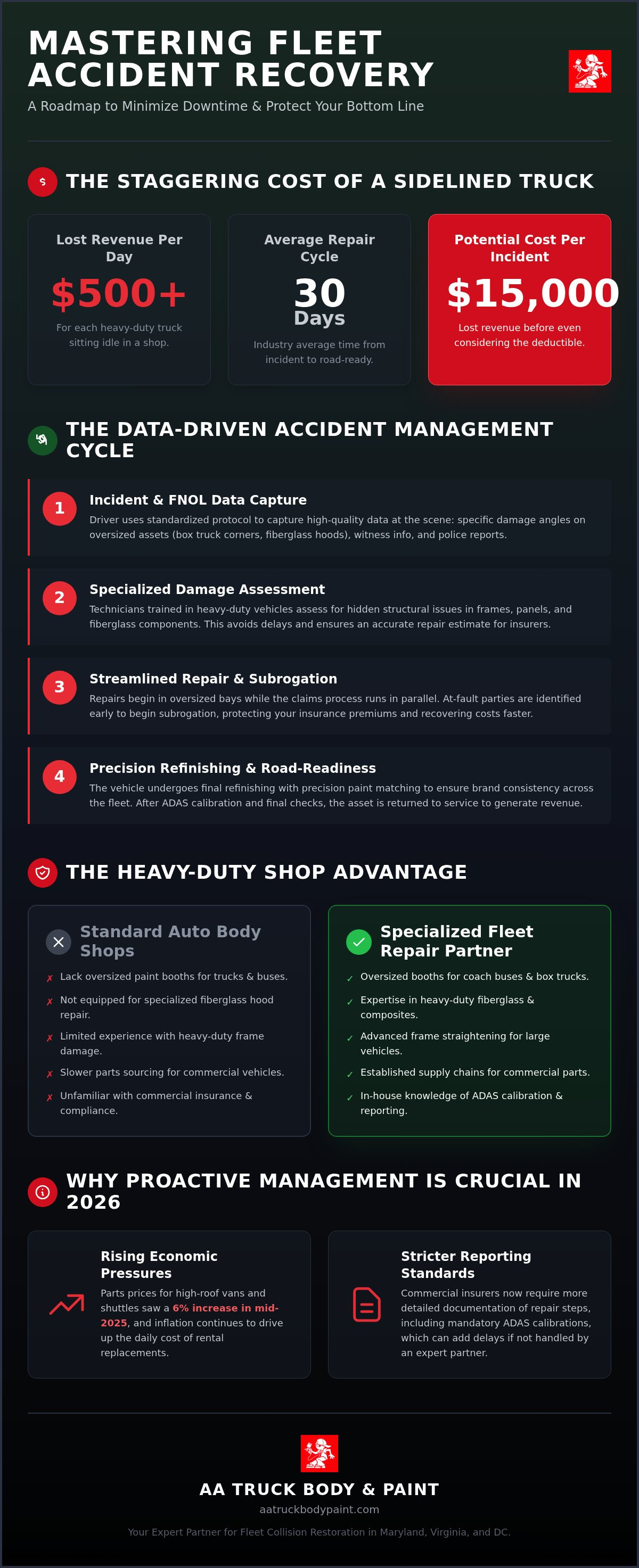
Every day one of your heavy-duty trucks sits idle in a shop, your operation loses upwards of $500 in revenue. When you multiply that by the current industry average repair cycle of 30 days, a single accident can easily cost your business $15,000 before you even consider the deductible. You know that managing a fleet is a game of uptime, yet the process of streamlining fleet collision repair often feels like an uphill battle against specialized fiberglass damage and complex insurance subrogation. It's frustrating to see assets sidelined simply because a local shop isn't equipped to handle oversized vans or coach buses.
We understand the pressure to keep your fleet moving and the stress that follows a highway collision. This guide provides a clear roadmap to master the complexities of fleet accident recovery so you can protect your bottom line. You'll learn how to establish a precise protocol for your drivers, ensure faster turnaround on heavy-duty body and paint work, and maximize cost recovery from at-fault parties. By the end of this article, you'll have the tools to turn a chaotic repair process into a disciplined, efficient recovery strategy that keeps your heavy-duty vehicles where they belong: on the road.
Table of Contents
Understanding Commercial Fleet Accident Management in 2026
Fleet accident management is often misunderstood as a simple administrative task handled by insurance adjusters. In reality, it's a comprehensive lifecycle that starts the moment a driver makes contact and ends only when the vehicle is back in service earning revenue. For managers in 2026, the focus has shifted toward integrated data. Modern fleet management systems now allow for real-time communication between the shop, the driver, and the claims adjuster. This integration is vital for streamlining fleet collision repair because it removes the communication silos that traditionally extend downtime.
The ultimate objective of this process is to minimize the Total Cost of Risk (TCOR). This metric includes the obvious repair bill, but it also accounts for insurance premiums, administrative overhead, and the massive cost of a vehicle sitting idle. Commercial fleets require distinct protocols because their assets aren't just transportation; they're specialized tools. A passenger car shop lacks the oversized paint booths and fiberglass expertise needed for a coach bus or a heavy-duty truck hood. Effective management ensures that these unique requirements are addressed immediately following an incident.
The Lifecycle of a Fleet Collision Claim
The journey begins with the First Notice of Loss (FNOL). In a professional fleet environment, this must be a standardized data-capture event where the driver records specific damage points on oversized assets. Once the vehicle reaches the facility, the assessment phase focuses on identifying hidden structural issues in box truck panels or heavy-duty frames. The cycle concludes with final refinishing. This step ensures brand consistency across your fleet, using precision paint matching so the repaired vehicle looks identical to the rest of your lineup.
Why 2026 Demands Proactive Management
Economic pressures have made passive management a liability. Parts prices for high-roof vans and shuttles rose more than 6% in mid-2025, and inflation continues to drive up the daily cost of rental replacements. Additionally, 2026 has introduced stricter reporting standards for commercial insurance providers. These carriers now require more detailed documentation of repair steps and ADAS calibrations. By streamlining fleet collision repair through a specialized physical partner, you ensure these reporting requirements are met without adding days to the repair timeline. Proactive management isn't just about fixing metal; it's about maintaining the operational tempo of your entire business.
The Core Pillars of an Effective Fleet Accident Response Plan
A successful response plan acts as a bridge between the roadside incident and the physical repair shop. While telematics provides the "what" and "where," a comprehensive strategy focuses on the "how" of getting assets back in service. This begins with standardizing the First Notice of Loss (FNOL) to ensure high-quality data is collected before the vehicle is even towed. By streamlining fleet collision repair through better field data, you eliminate the back-and-forth between adjusters and technicians that often stalls progress.
FNOL: Capturing the Right Data at the Scene
Drivers are your first line of defense. They must be trained to document oversized vehicle damage with precision. For box trucks, this means capturing specific angles of the corner caps and side panels. For heavy-duty trucks, photos should include the hood and any fiberglass components that are prone to cracking. Collecting witness statements and police report numbers is critical for compliance with FMCSA safety regulations. Modern fleet managers use mobile apps to sync this scene data directly with their management systems, allowing for an immediate transition to the damage assessment phase.
Streamlining the Claims and Subrogation Process
Once the data is captured, the focus shifts to financial and operational recovery. Expert adjusters who understand commercial fiberglass and panel damage are essential. They can distinguish between cosmetic issues and structural compromises that might sideline a vehicle later. Early subrogation is another pillar of a strong plan. By identifying at-fault third parties immediately, you protect your insurance premiums and recover costs faster. This proactive approach reduces the administrative burden on your internal staff, allowing them to focus on operations rather than paperwork.
Effective communication is the final pillar. A centralized hub where fleet managers, insurance adjusters, and the repair facility can share updates prevents delays. This transparency ensures that "repair vs. replace" decisions are made quickly based on accurate data. If you are looking for a partner to act as the physical wing of your response strategy, consider how a specialized facility for commercial truck body and paint can accelerate your recovery timeline. Streamlining fleet collision repair is a team effort that requires both digital accuracy and physical technical mastery.
The Critical Role of Specialized Heavy-Duty Body Shops
Many fleet managers invest heavily in administrative software while overlooking the physical bottleneck: the repair facility itself. Most residential body shops are designed for passenger cars and lack the infrastructure to handle commercial assets. If a shop cannot accommodate the height of a high-roof Sprinter or the length of a coach bus, your vehicle will sit in a queue or be rejected entirely. Streamlining fleet collision repair requires a facility built specifically for heavy-duty requirements. Without the right booth dimensions or specialized frame equipment, downtime will inevitably extend beyond your projections.
Facility Requirements for Oversized Vehicles
Ceiling height is the primary constraint for commercial work. A specialized facility must utilize oversized paint booths designed for high-roof Transit vans and box trucks. Beyond simple clearance, these shops require heavy-duty frame straightening equipment capable of handling a truck chassis. These tools are essential to ensure the vehicle returns to the safety standards promoted by the Commercial Vehicle Safety Alliance. Handling large-scale transport vehicles demands a methodical approach to safety that residential shops simply aren't equipped to provide.
Technical mastery in this specialized field also involves specific knowledge of substrate preparation. Heavy-truck hood painting and refinishing require different techniques than standard automotive work. If a technician treats a composite hood like a steel car door, the finish will likely peel or crack within months. This level of precision is vital for fleets operating in the DMV region, where vehicles face consistent exposure to road salt and variable weather. Durability is a core component of fleet value.
Specialized Skillsets: Fiberglass and Panel Restoration
Fiberglass repair is a distinct craft that differs significantly from traditional sheet metal work. Unlike steel, which can often be pulled or hammered, fiberglass requires a layered reconstruction process to maintain its structural integrity. This is particularly critical for coach and shuttle bus bodies where passenger safety is paramount. For box trucks, seamless side panel replacement is necessary to maintain both aerodynamics and a professional brand image.
Choosing a partner who understands these materials is a key part of streamlining fleet collision repair. A shop must demonstrate the ability to restore complex composites and oversized panels to their original strength. When you work with a facility that specializes in these heavy-duty assets, you avoid the "trial and error" phase that often occurs at generalist shops. This expertise ensures that the repair is done correctly the first time, preventing repeated downtime and protecting your long-term investment.
Strategies for Reducing Vehicle Downtime and Total Loss Costs
Operational efficiency depends on the speed of your decision-making. When a heavy-duty asset is damaged, the "Repair vs. Replace" choice determines if a vehicle is sidelined for weeks or months. Streamlining fleet collision repair requires a pragmatic assessment of part lead times and structural integrity. If a replacement panel for a specialized box truck has a six-week backorder, a skilled technician might choose to repair the existing fiberglass to get the asset back in service. Making these calls early prevents vehicles from taking up valuable space while waiting for a remote adjuster's approval.
The True Cost of Downtime in 2026
Calculating daily revenue loss is essential for every fleet manager. While the industry baseline sits at $500 per day, downtime is truly the "hidden tax" on fleet accidents that erodes profitability long after the claim is filed. This cost ripples through your entire delivery schedule. One missing truck forces expensive rerouting, triggers overtime pay for other drivers, and risks late-delivery penalties that damage customer relationships. Minimizing this tax requires a repair partner who prioritizes speed without sacrificing technical precision.
Optimizing the Repair Timeline
Reducing the wait starts with pre-ordering parts during the estimate approval phase. Rather than waiting for the final insurance check to clear, proactive managers coordinate with shops to secure high-demand components like heavy-truck hoods or corner caps immediately. Choosing a facility that offers comprehensive body and paint in-house is another critical factor. It eliminates the logistical delays of moving a vehicle between different vendors for painting and structural work. There is a distinct benefit to using a shop that excludes mechanical diagnostics to focus exclusively on body speed. Your asset won't be buried behind complex engine repair jobs that have nothing to do with collision restoration.
Precision paint matching ensures that repaired vehicles maintain brand consistency and high resale value. Utilizing local DMV partners eliminates long-distance towing delays that add days to a timeline. For minor damage, such as box truck corner cap repairs, we recommend a "Fast-Track" system to move these smaller jobs through the shop in record time. If your fleet requires a dedicated partner for commercial truck body and paint, focusing on specialized body expertise is the most effective way to protect your bottom line. Streamlining fleet collision repair is about moving assets through the physical shop with the same discipline you apply to your logistics network.
Partnering with a DMV Expert for Fleet Collision Restoration
Establishing a robust administrative protocol is only half the battle. Without a physical facility that can execute heavy-duty work with precision, your accident management plan remains incomplete. For fleets operating across Maryland, Virginia, and DC, regional expertise is a logistical necessity. Local road conditions and the aggressive use of road salt in the Mid-Atlantic demand specific paint and coating standards to prevent premature corrosion on box truck panels and heavy-duty chassis. By choosing a local specialist, you reduce transit time and ensure your assets are handled by technicians who understand the specific operational stresses of the DMV corridor.
Decades of Experience in the DMV Area
AA Truck Body & Paint has spent over 30 years as a dedicated partner to commercial fleets throughout the region. Our Lorton-based facility was built specifically to accommodate the largest assets on the road, from coach buses to high-roof Sprinter vans. We don't split our focus with residential passenger car repairs. This singular commitment to streamlining fleet collision repair means your heavy-duty vehicles aren't competing for space with small sedans. We understand that for a professional fleet, every hour of shop time is an hour of lost revenue. Our team applies technical mastery to fiberglass and oversized panels, ensuring repairs are durable enough to withstand the high-mileage demands of regional transport.
Get Started with a Professional Fleet Estimate
Integrating professional bodywork into your accident management plan starts with a clear, accurate assessment. We provide detailed estimates that account for the complexities of heavy truck hoods and specialized composite materials. Our process is designed to move your vehicle from the initial consultation to final refinishing with methodical precision. If you're ready to reduce downtime and secure a reliable physical wing for your fleet's recovery strategy, contact us to discuss your requirements. We focus exclusively on body and paint restoration, allowing us to maintain a faster turnaround for oversized van and truck repairs.
By streamlining fleet collision repair through a specialized partner, you gain the stability and competence needed to protect your bottom line in 2026. Reach out to our team at AA Truck Body & Paint to schedule your fleet's next consultation. We're here to act as a steady, experienced anchor for your business, providing the high-standard craftsmanship your heavy-duty vehicles require to stay on the road.
Protect Your Bottom Line with a Specialized Repair Strategy
Managing a commercial fleet in 2026 requires a disciplined approach that balances digital claims management with physical technical expertise. By establishing clear driver protocols and prioritizing specialized facilities, you can successfully reduce the revenue loss associated with idle assets. The most effective way to achieve this is by streamlining fleet collision repair through a partner who understands the unique requirements of heavy-duty vehicles and oversized vans. Administrative speed means little if your vehicle is stuck in a shop that lacks the proper infrastructure.
With 30+ years of heavy truck expertise, our team provides the reliability your business needs to stay operational. Our Lorton, VA facility features specialized oversized paint booths and expert fiberglass and panel restoration capabilities to handle your most challenging repairs. We're dedicated to helping you master the complexities of accident recovery with pragmatic, high-quality solutions. Partner with AA Truck Body & Paint for your DMV fleet restoration needs and ensure your vehicles receive the precise care they deserve. We're ready to help you get your fleet back on the road with confidence.
Frequently Asked Questions
What is the first thing a driver should do after a commercial truck accident?
The first priority is ensuring the safety of all parties and securing the scene to prevent secondary accidents. Once the area is safe, the driver must begin a standardized documentation process. This includes taking clear photos of the damage from multiple angles, specifically focusing on fiberglass components or box truck panels. Capturing high-quality data at the scene is the first step in streamlining fleet collision repair and ensuring a faster insurance claim process.
How long does a typical heavy truck body repair take in 2026?
While timelines vary based on damage severity, the average repair cycle time was approximately 30 days as of late 2025. This represents a decrease from previous years due to better data integration across the industry. For heavy-duty assets, downtime is often extended by parts availability for specialized components like hoods or oversized panels. Working with a dedicated body and paint facility helps minimize these delays by focusing exclusively on the restoration process without mechanical distractions.
Can any body shop handle fiberglass repair on a coach bus?
No, most general collision centers are ill-equipped for the complexities of coach bus restoration. Fiberglass repair is a distinct craft that requires layered reconstruction rather than simple sheet metal pulling. A shop must have oversized paint booths and specialized structural equipment to handle these large-scale transport vehicles safely. Choosing a specialist ensures the structural integrity of the bus is maintained, which is vital for passenger safety and long-term vehicle durability in the DMV region.
What is subrogation in the context of fleet accident management?
Subrogation is the legal process where your insurance provider pursues the at-fault third party to recover the costs of a claim. In fleet management, initiating this process early is critical for protecting your loss run history and insurance premiums. It allows your business to recoup deductibles and repair expenses when your driver isn't at fault. Efficient subrogation reduces the total cost of risk and provides a clearer financial picture for your entire commercial operation in Maryland or Virginia.
How does specialized paint matching work for commercial fleets?
Precision paint matching utilizes advanced spectrophotometer technology to analyze the existing finish on your heavy-duty vehicles. This ensures that new paint on a repaired box truck panel or hood perfectly matches the rest of your fleet. Maintaining brand consistency is essential for professional identity and resale value. Specialized shops use high-quality coatings designed to withstand the road salt and variable weather conditions common in the Maryland, Virginia, and DC area.
Why should I choose a commercial-only shop over a general collision center?
Commercial-only shops possess the specialized infrastructure, such as oversized booths and heavy-duty frame machines, that general shops lack. They understand that streamlining fleet collision repair is about technical mastery and operational speed. By excluding passenger cars and mechanical work, these facilities avoid the common bottlenecks that delay large-scale repairs. This focus ensures your heavy trucks and oversized vans receive the dedicated attention required to meet professional safety and aesthetic standards for your business.
What are the common causes of frame damage in heavy-duty trucks?
Frame damage in heavy-duty assets often results from high-impact collisions or jackknife incidents that put extreme stress on the chassis. In the Mid-Atlantic region, consistent exposure to uneven road surfaces and heavy hauling also contributes to structural fatigue over time. Identifying these issues requires specialized diagnostic tools and technicians who understand the load-bearing requirements of commercial vehicles. Addressing frame misalignment promptly is essential for preventing uneven tire wear and ensuring the vehicle remains safe for highway use.
How can I reduce the administrative time spent on insurance claims?
You can reduce administrative overhead by implementing a standardized First Notice of Loss protocol for your drivers. Using mobile apps to capture scene data immediately ensures that adjusters receive high-quality information without a manual back-and-forth. Partnering with a repair facility that communicates directly with your fleet management system further simplifies the process. This integrated approach allows your staff to focus on logistics while the physical restoration of your heavy-duty assets moves forward efficiently.


Comments